
Trailing, for the top shelves
Golden pothos, neon pothos and philodendron Brasil on the upper shelves, where the strips light them from below and the vines can hang. They grow fast, cover the wall, and shrug off a missed week.
Case study · Denver office
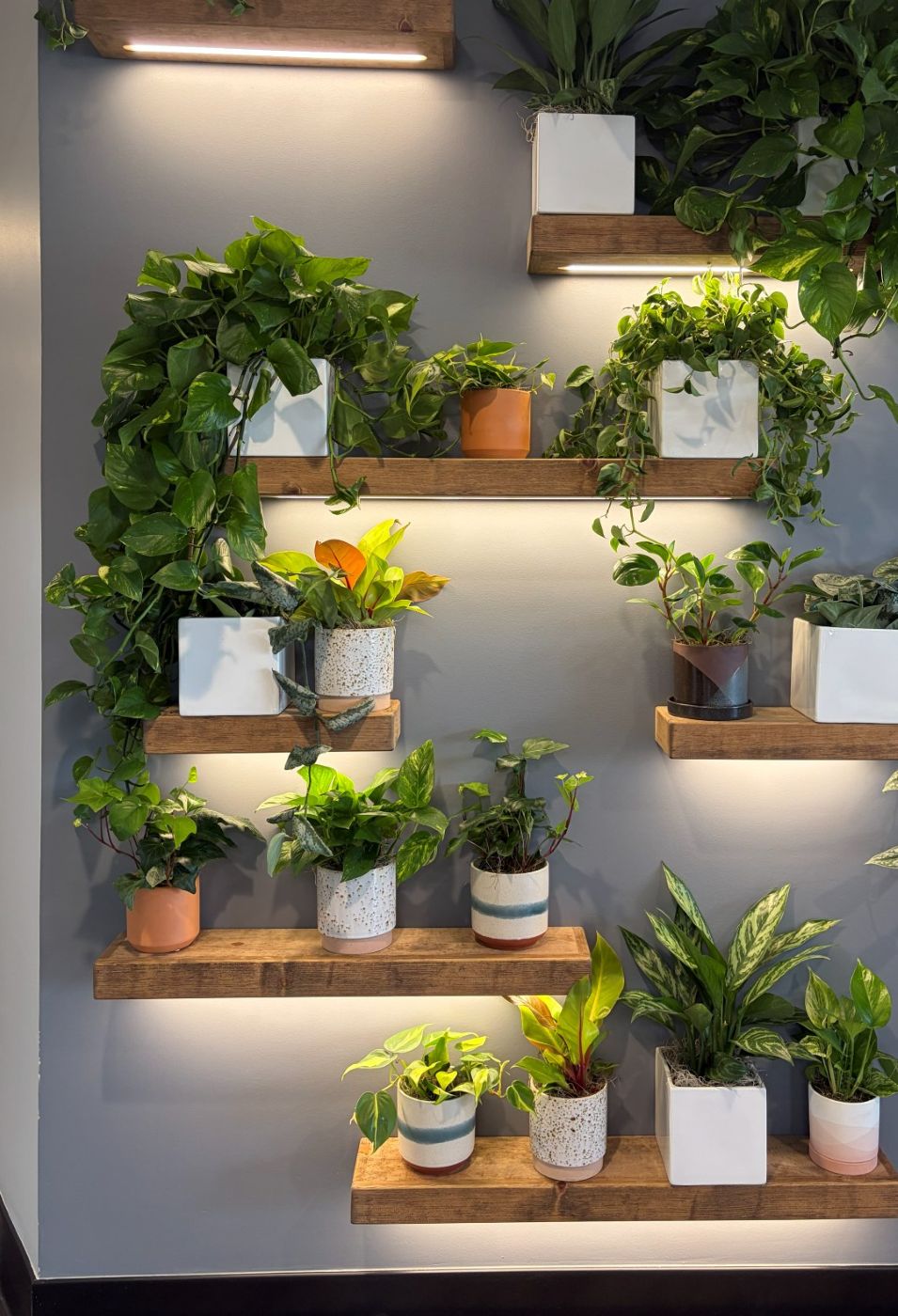
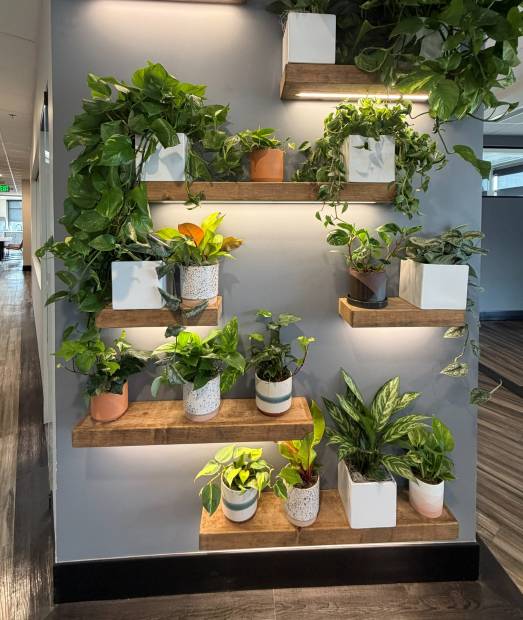
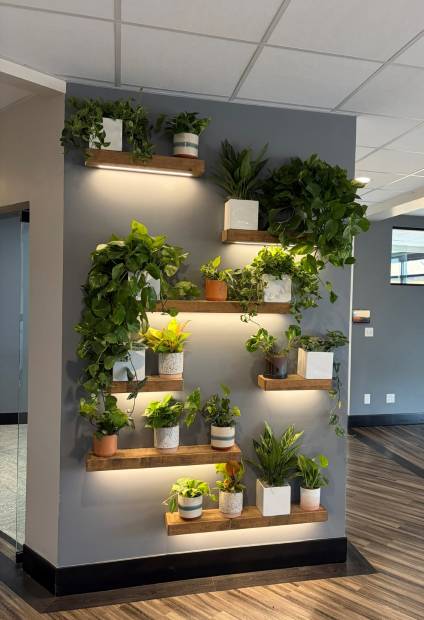
A hallway wall with no window of its own, turned into the first thing visitors photograph. Roughly twenty plants on staggered, lit floating shelves, chosen for the light they actually get, and kept that way on a recurring visit.
The brief
The wall sits in a main hallway between the entry and the work floor. It gets foot traffic all day and no daylight to speak of. The ask was a plant wall that reads as lush from the door, looks intentional up close, and does not quietly die the way most office greenery does.
Shelf walls fail for one reason: the plants are chosen for the photo, not for the light. Under strip lighting a foot away, most "low light" plants are fine. A foot and a half further back, or on a shelf where the strip is above them, half of them are not. So every shelf got its own plant list.
What went where
Golden pothos, neon pothos and philodendron Brasil on the upper shelves, where the strips light them from below and the vines can hang. They grow fast, cover the wall, and shrug off a missed week.
Peperomia and satin pothos in the middle rows, where there is less room between shelves. Slow growers that stay the size they were planted and never block the light to the shelf below.
Silver Chinese evergreens on the bottom shelf, the darkest spot on the wall. They hold their color under the least light of anything on the list and give the wall a solid footing.
Keeping it this way
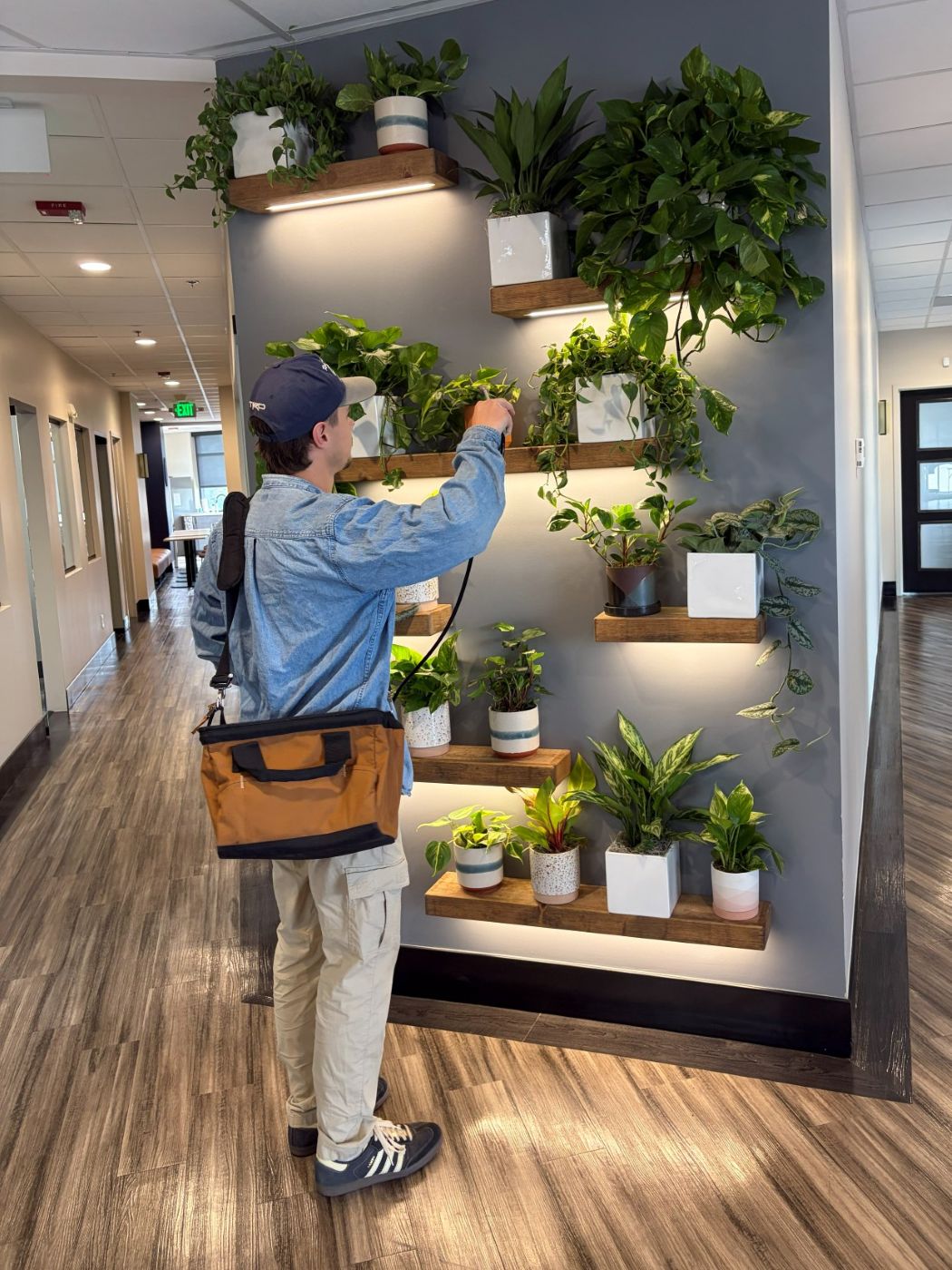
A plant wall is twenty small pots with twenty different drying rates. The pots nearest the strip lights dry in days, the ones in the corners take two weeks. Watering them all on the same day is how walls like this go brown from the top down. So each pot is metered on every visit and watered to its own number.
Beyond water: vines get trained along the shelves instead of straight down, leaves get dusted so the lighting works, anything leggy gets cut back, and the occasional plant that has outgrown its spot is swapped for a smaller one. The client never has to think about it, which was the point.
Budgeting one
The shelves and lighting are the building's. Our side is the design, the plants and pottery, a day of planting, and the ongoing care. The plant and pottery line is the one that swings most, because twenty matching ceramic pots cost more than twenty nursery pots.
| Item | Price |
|---|---|
| Concept board and shelf-by-shelf plant list | $150 |
| Planting and placement, two people, one day | $900 to $1,200 |
| Plants, pottery and soilItemized, about twenty plants | $800 to $1,800 |
| Maintenance visitEvery other week | from $85 per visit |
Prices are our published rates. Maintenance starts at $85 a visit, set by the size of the space and where it is. The full breakdown of what an office plant service costs.
Send a photo of the space and a rough idea of the lighting. The phone consultation is free, and a shelf wall can usually be scoped from the photo.